


The internet has spoken and the verdict is unanimous: the Ferrari Luce is a betrayal, a disgrace and an iPhone on wheels. Ferrari's stock dropped and we totally understand the outrage.
But step back for a moment, because the backlash against the Luce says more about our nostalgia bias than it does about the car itself. The Luce is not a confused car or a reckless one. It is, by almost every measure, a deeply rational one and that is precisely what hurts. In a lot of instances Ferrari just had no choice and the company is doing what a leader in its position should do at this point in time: lead.
This piece covers 7 crucial factors behind the Luce, but if you have ever loved Ferrari for reasons you cannot fully explain, stay with us until the last section.
1. Electrification of the car industry
The Luce breaks with nearly every tradition that defined Ferrari for 77 years, but the world it exists in has also changed as electrification is not a trend Ferrari can opt out of. The question was never whether Ferrari would build an EV, it was how, and rather than producing a timid, apologetic first effort, Ferrari swung for the fences. They made a bespoke platform, invited a world-class designer and presented a car that is provoking the kind of conversation that only significant machines provoke.

Photo: Ferrari
It is also worth remembering what Ferrari chose not to do: they did not badge-engineer an EV from a platform they shared with a partner. They did not rush a conversion of an existing model and call it a revolution. They spent years and billions building something entirely from scratch, on a bespoke platform, with a dedicated facility in Maranello. That level of commitment does not come from a company surrendering to a trend.
2. New kind of wealthy
Ferrari's traditional buyer (a wealthy man in his 50s or 60s who grew up idolising the V12) is a shrinking demographic. The ultra-wealthy buyers of the next generation are tech entrepreneurs, not petrolheads in the sense of the word we have used for decades. The Luce, co-designed by the man who made the iPhone, is a direct pitch to that audience.

Photo: Kyan Foster
Ferrari is not abandoning its existing customers: the V6, V8 and V12 cars still exist and will continue to do so. The entire combustion and hybrid range remains intact and will for years. What Ferrari is doing is ensuring that when a 35-year-old who just sold their startup for half a billion dollars walks into a showroom, there is a Ferrari with their name on it. Brands that fail to make that connection in one generation do not get a second chance.
3. China is slipping away
Ferrari's sales in China and Taiwan fell to 1,162 units in 2024, down from 1,490 in 2023. China's luxury market increasingly favours electric and homegrown EV brands are producing genuinely impressive cars. Ferrari needed a product that could re-enter that conversation credibly.
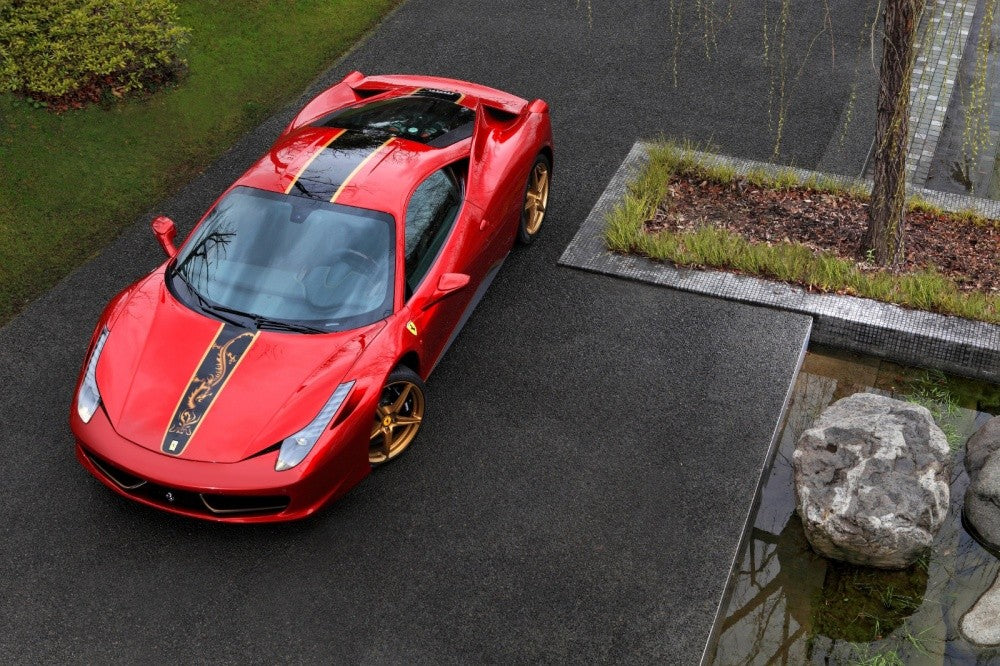
Photo: Ferrari
The scale of what is happening in China's luxury EV market is difficult to overstate. Chinese brands like NIO and BYD are building fast, beautiful electric cars that China's new wealthy generation actually want to be seen in. You can’t have a Ferrari lineup with no electric answer to that conversation.
4. Shareholders don't do nostalgia
Ferrari went public in 2015 and that changed the game in a profound way. Private company Ferrari could afford to be purely romantic about its identity, building only what Enzo Ferrari would approve of, on whatever timeline felt right. Public company Ferrari answers to shareholders every quarter and they care about two things: growth and relevance. Public companies need expanding addressable markets and Ferrari can't grow meaningfully by selling more V12s to the same 13,000 people per year. Ferrari is targeting new markets such as China and technology-sector entrepreneurs, aiming to broaden its customer base with the Luce.

Photo: CNBC
The cruel twist is that the market punished them for it anyway. Ferrari shares fell sharply the day after the reveal, as investors and critics reacted dismissively to the design. However, short-term sentiment and long-term strategy are two different things and Ferrari has always played the longer game. The question is not whether the Luce was well-received on launch day. The question is whether, in ten years, Ferrari's decision to move first looks like courage or calamity and history suggests it will be the former.
5. The decision was made earlier
The loudest critics of the Luce are making a fundamental mistake: they are judging a 2026 car by 2026 sentiment. That is not how car development works, because a car of this ambition takes a long time from first sketch to finished product. The strategic decision to build the Luce was most likely made somewhere around 2020.
This was right at the peak of the world's collective conviction that electric was the only future worth building toward. Regulatory tailwinds were strong, public enthusiasm was at its height and every analyst on earth was telling every automaker to electrify. Ferrari made their bet in that climate and they made it seriously. By the time the cultural mood shifted and range anxiety discourse gave way to EV backlash, the Ferrari Luce was already too far down the road to turn back.

Photo: Ferrari
We are not talking about a decision that could be quietly shelved or written off. Ferrari built an entirely dedicated facility in Maranello (the E-Building) specifically to produce the Luce's electric components. That is a billion-euro statement of intent, long before a single critic typed a word about it. You do not build a factory and then change your mind because the internet is unhappy.
Originally, the EU planned to effectively end sales of new petrol and diesel cars by 2035. But in late 2025 the European Commission started reconsidering the strict version of that rule after pressure from automakers and governments.
However, Ferrari knows that in fifty years, the Luce will be studied as the moment one of the oldest names in performance car building chose to lead rather than follow. That kind of historical positioning is itself a brand asset worth billions and it only exists if you move first.
6. Science gave us this design
To extract meaningful range from an electric car (the kind of range that makes a 550,000 euro grand tourer actually usable across a continent) you need aerodynamic efficiency and aerodynamic efficiency is not a stylistic choice, it’s a mathematical one.
You need a low nose to cut cleanly through oncoming air, an elongated midsection to manage airflow along the body and a truncated tail to minimise drag at the rear. It’s not Jony Ive imposing Apple aesthetics on a Ferrari, it's physics imposing itself on everyone equally. The shape the internet is mocking is, in large part, the shape the laws of fluid dynamics demand. Had Ferrari prioritised looks over aerodynamics and delivered half the range, the internet would have been just as angry.

Photo: Mercedes-Benz
Look at every long-range electric car that has succeeded on efficiency grounds and you will find the same basic geometry. The Lucid Air, Mercedes EQS and Hyundai Ioniq 6 all converge on the same answer because the question is always the same. Air does not care about brand heritage or opinions of keyboard warriors. Ferrari's designers did not capitulate to a trend when they drew the Luce's silhouette, but they did the maths and the maths gave them this car.
7. Legacy needed to be protected
There was an easier path available and Ferrari consciously rejected it. They could have taken a 849 Testarossa, stripped out the combustion engine, dropped in a battery pack and called it Ferrari's electric future. It would have been familiar, recognisable and almost certainly better received by the traditionalists currently sharpening their pitchforks. But it would have been a catastrophe of a different kind, because an electric Ferrari sports car would have forced a direct, inescapable comparison between the electric version and the combustion original.

Every test drive would have ended with the same question: but doesn't it feel like something is missing? The iconic silhouette would have carried the weight of everything that was gone. By building the Luce as an entirely new design (a new body for a new kind of Ferrari customer) Ferrari did something quietly brilliant: they shielded their legacy. The 849 Testarossa remains exactly what it always was, because the electric question has its own car now. The Luce doesn't replace a Ferrari: it expands what Ferrari can mean. That distinction, which the internet has almost entirely missed, may turn out to be the most important strategic decision the company has made in a generation.
Some things logic cannot touch
Forget the regulatory pressures, the shareholder obligations, the technology-sector entrepreneurs Ferrari is courting in Asia. Because there is a version of this story that belongs to the person who has a poster of a 250 GTO on their bedroom wall, who can identify a Ferrari by exhaust note alone, who has spent decades believing that the Prancing Horse stood for something no spreadsheet could capture.

Photo: Spencer Modes
For that person, the Luce is not a triumph, but it’s a funeral. The sound of the spine-reorganising wail of a Ferrari V12 at 9,000 rpm is not coming from this car and at 2,260 kg, the Luce is nearly two and a half tonnes of aluminium and battery cells. Perhaps fast in a straight line, but fast and alive are two entirely different things.
The cruelest part is that the Luce is not even for them. Ferrari is targeting new markets such as China and technology-sector entrepreneurs. The person buying the Luce may never have owned a Ferrari before, may not know what a flat-plane crank is or why anyone would cry at the sound of one. To the lifelong Ferrari faithful, that feels less like evolution and more like being quietly replaced.

Photo: Masaki Aizawa
The second hand electric car market is, to put it gently, not inspiring confidence. The Porsche Taycan has become one of the fastest depreciating luxury cars on the market. It's not just electric cars feeling the pressure, walk into enough Ferrari showrooms right now and you will find 296 GTBs and SF90 Stradales sitting unsold in ways that would have been unthinkable five years ago. The Luce, at 550,000 euros new, is not immune to that logic: a car that loses a third of its value in three years stops feeling like a passionate purchase and starts feeling like a very expensive mistake.
None of this makes the Luce a bad car: rationally, it may be a masterpiece. But the Ferrari fan was never in this for rational reasons. They were in it for the noise, the heat, the drama, the sheer unnecessary excess of a combustion engine doing something it has absolutely no business doing that well. The Luce is a very reasonable car and a very reasonable Ferrari is, for some people, a contradiction in terms.
Do you still hate the Ferrari Luce?
Subscribe to the ROSSOautomobili newsletter.
We make every effort to credit photographers and image sources accurately. Some images may have unknown origins. If you see a photo that’s yours and would like it credited or removed, please contact us.


You can try to say and make every comments/excuses for this huge Ferrari blunder. The fact of the matter is this car is not what a Ferrari should be. It is a disgrace and an insult to Mr. Enzo himself. All you have to do is listen to Mr. Luca di Montezemelo himself and that’s all. He said it is the destruction of a myth and they should immefiately remove the Cavallino emblem from this machine. Point blank.
I am a Ferrari owner. I do not feel like the Luce depreciates the brand. I have been defending the Luce in conversations for many of the above stated reasons. I ask, when Lamborghini introduced its SUV-did its brand disrespect what has become of its future?
I am a Ferrari owner. I do not feel like the Luce depreciates the brand. I have been defending the Luce in conversations for many of the above stated reasons. I ask, when Lamborghini introduced its SUV-did its brand disrespect what has become of its future?
bulls*t, sir;
times are not so hard nor is there a rationale for Ferrari to reinvent the Prius;
But will they race it?…..If not, not a Ferrari!
Leave a comment